
Fashion Photography AI: The Cause-and-Effect Revolution Transforming E-Commerce Imagery in 2026
Fashion photography AI breaks the traditional cause-and-effect chain of expensive, slow photoshoots. Discover how AI transforms 2-4 week production cycles into 30-second generation times, cuts costs by 95%, and creates unlimited creative variations—fundamentally restructuring fashion e-commerce content strategy with measurable ROI.
Traditional fashion photography creates a predictable chain reaction: new product drop → book studio → hire models → schedule shoot → wait weeks → pay $5,000-25,000 → receive images. Fashion photography AI breaks this chain entirely, replacing it with: upload product → generate unlimited variations → receive professional imagery in minutes → pay $199/month. This isn't incremental improvement—it's a fundamental restructuring of how fashion brands create visual content.
The Cause: Why Traditional Fashion Photography Created an Unsustainable System
The traditional fashion photography model was built on scarcity and linear production. Every new SKU triggered the same expensive, time-consuming sequence:
- Studio booking required 2-4 weeks advance notice, costing $500-2,000/day
- Model casting meant agency fees, day rates ($500-5,000), and limited diversity options
- Physical production demanded location permits, styling teams, makeup artists, and equipment
- Post-production added $50-150 per image and 1-2 weeks turnaround
- Revision cycles meant rebooking everything or accepting imperfect results
This system worked when brands launched 2-4 collections annually. In 2026, e-commerce brands launch products weekly, manage 500-5,000 SKUs, and need content for 8+ platforms simultaneously. The old cause-and-effect chain collapsed under modern volume requirements.
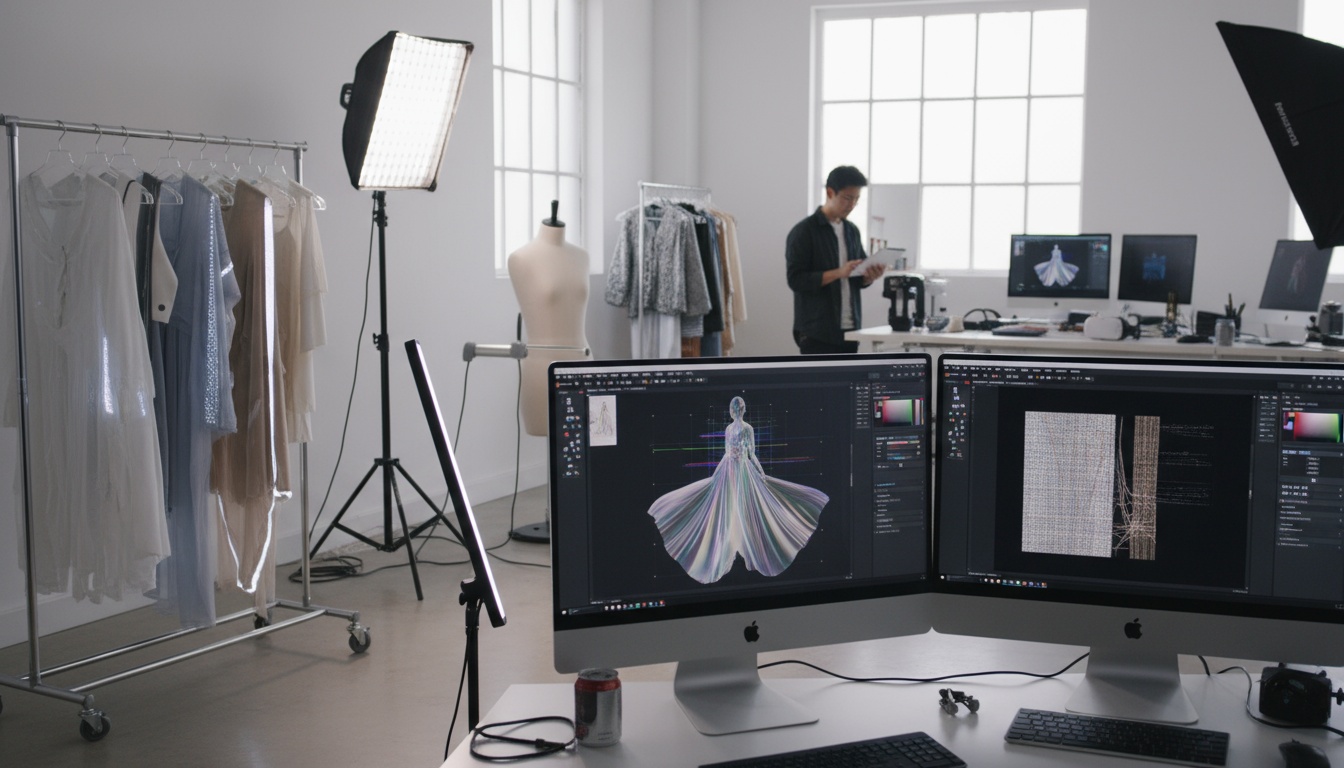
The Effect: How AI Rewrites the Fashion Photography Equation
Fashion photography AI doesn't just speed up the old process—it eliminates most steps entirely and inverts the economics:
Immediate Effects: Production Transformation
- Time compression: 2-4 week production cycles become 30-90 second generation times. A 50-SKU collection that required 6 weeks now takes 2 hours.
- Cost inversion: Fixed monthly subscription ($199-499) replaces per-shoot costs ($5,000-25,000). Marginal cost per image drops from $50-200 to $0.20-0.40.
- Unlimited variation: One product photo generates infinite model types, backgrounds, poses, and contexts—impossible with traditional photography.
- Instant diversity: Showcase products on models of every size, ethnicity, age, and gender without casting limitations or additional costs.
Secondary Effects: Strategic Business Impact
The primary production changes trigger cascading business effects:
- Launch velocity increases: Brands ship products the moment they're ready, not when photography schedules allow. Fast fashion competitors lose their speed advantage.
- Testing becomes viable: A/B test unlimited creative variations (backgrounds, models, compositions) without budget constraints. Data-driven optimization replaces creative guesswork.
- Market expansion accelerates: Create localized content for new markets (different model demographics, cultural contexts) in hours instead of months.
- Inventory risk decreases: Generate full product photography before manufacturing commitments, testing market response with pre-orders.
- Team structure shifts: Marketing teams redirect budgets from production costs to strategy, analytics, and customer acquisition.

Milano AI: The Complete Operating System for Fashion Photography AI
While generic AI image generators offer basic functionality, Milano AI is purpose-built for fashion e-commerce, delivering the complete cause-and-effect transformation:
Cause: Upload Product Photos
Start with flat lays, vendor shots, or smartphone photos. Milano AI's fashion-trained models understand fabric drape, texture, and garment construction.
Effect: Complete Visual Content System
- Campaign imagery: Professional lifestyle shots with AI models in any setting (urban, studio, nature, luxury interiors)
- E-commerce optimization: White background marketplace images, ghost mannequin effects, detail shots, multiple angles
- Video content: Product demonstrations, styling videos, campaign clips for TikTok, Instagram Reels, YouTube Shorts
- Bulk processing: Upload entire catalogs, generate thousands of variations simultaneously
- Marketing automation: Auto-generate social posts, blog content, email campaigns from product imagery
Cascading Business Outcomes
Milano AI users report predictable cause-and-effect results:
- 95% cost reduction: $32,000-1,400,000 annual savings vs. traditional photography
- 10x content volume: Same team produces 10x more assets monthly
- 3-5x faster launches: Products go from design to market in days instead of weeks
- 40-60% higher conversion: Professional imagery across all SKUs (not just hero products) increases sales
- Unified workflow: One platform replaces photographers, studios, editors, social media tools, and content calendars
The New Cause-and-Effect Chain: AI-First Fashion Marketing
Fashion photography AI creates a new operational reality:
Old chain: Product ready → wait for shoot → receive images → launch → limited testing → accept results
New chain: Product ready → generate unlimited variations → launch immediately → test everything → optimize continuously → scale winners
This isn't just faster or cheaper—it's a fundamentally different strategic capability. Brands can now test market response before inventory commitments, personalize content for micro-segments, and iterate creative in real-time based on performance data.
Conclusion: The Inevitable Effect of AI Adoption
The cause-and-effect relationship is clear: brands adopting fashion photography AI gain compounding advantages in speed, cost, and creative flexibility. Those maintaining traditional workflows face escalating disadvantages as competitors launch faster, test more variations, and operate at fraction of the cost.
The question isn't whether to adopt AI—it's how quickly you can transform your workflow to capture the strategic advantages before competitors do.
Ready to experience the cause-and-effect transformation? Start with Milano AI's free trial—10 credits to test with your actual products. See firsthand how AI restructures fashion photography economics in your favor.
Frequently Asked Questions
Fashion photography AI uses machine learning trained specifically on fashion imagery to transform simple product photos into professional campaign content. Upload a flat lay or basic product shot, select AI models (diverse body types, ethnicities, ages), choose backgrounds and contexts (studio, lifestyle, seasonal), and generate unlimited variations in 30-90 seconds. The AI understands fabric drape, garment construction, and fashion photography standards, producing marketplace-ready images indistinguishable from traditional shoots.
Scale Your Fashion E-Commerce with AI
Create professional campaigns and product photography in minutes. Start with 10 free credits—no credit card required.
Related Articles

Other AI Solutions vs Milano AI: 11 Things Fashion Brands Get Wrong (And How to Fix Them)
Most AI solutions were built for general enterprise workflows, not fashion e-commerce realities. This listicle breaks down 11 critical differences between typical AI tools and Milano AI—from fashion-first design to business-wide transformation. Learn why fashion brands need a complete operating system, not another point solution.

Other AI Solutions vs Milano AI: What Fashion E-Commerce Brands Need to Know in 2026
Milan hosts 100+ AI companies, but only Milano AI was built specifically for fashion e-commerce. Compare generic AI solutions (chatbots, analytics, custom development) against Milano AI's complete platform: visual content automation, marketing suite, and business intelligence. See why fashion brands choose integrated systems over fragmented tools, cutting costs 95% while scaling 100x faster.

Leonardo AI vs Milano AI: Which Platform Wins for Fashion E-Commerce in 2026?
Leonardo AI vs Milano AI: Complete 2026 comparison for fashion e-commerce decision-makers. Leonardo AI offers general image generation ($152K-$706K annual costs). Milano AI provides complete business operating system with 97-98% cost savings ($7K-$26K annually), replacing photoshoots, agencies, marketing automation, and analytics. Real ROI calculations, workflow comparisons, and strategic guidance for CMOs, e-commerce directors, and fashion brand founders choosing between incremental tools and transformational platforms.