
Cost-Effective Fashion Photography: Traditional vs AI Solutions for E-Commerce Brands
Traditional fashion photography costs $5,000-25,000 per shoot. Compare DIY, freelance, agency, and AI-powered solutions to discover how modern e-commerce brands cut content costs by 95% while maintaining professional quality. Complete ROI analysis and strategic implementation guide for fashion retailers.
Fashion e-commerce brands face a critical challenge: high-quality product photography drives conversions, but traditional photoshoots cost $5,000-25,000 per session. For indie labels and mid-market retailers, this creates an impossible choice between professional imagery and budget constraints. This comprehensive comparison reveals how different photography approaches stack up—and why AI-powered solutions are revolutionizing fashion content creation.
The Real Costs: Traditional Fashion Photography Breakdown
Understanding where your budget disappears is the first step to optimization. Traditional fashion photoshoots require multiple expensive components:
- Photographer fees: $250-500/hour or $900-2,500+ for half/full day shoots
- Professional models: $20-50/hour for beginners, $150+/hour for experienced talent, plus agency fees
- Styling and hair/makeup: $350-800+ per specialist, per day
- Location/studio rental: $150-500+ daily
- Post-production: Retouching, editing, licensing, and rush fees add 20-40% to total costs
Pricing structures vary widely: per-image ($40-200+), hourly/daily rates ($100-500/hour), per-SKU pricing for catalogs, or bulk packages for volume discounts. The challenge? Maintaining consistent quality while managing overhead—especially problematic for small teams without dedicated creative departments.
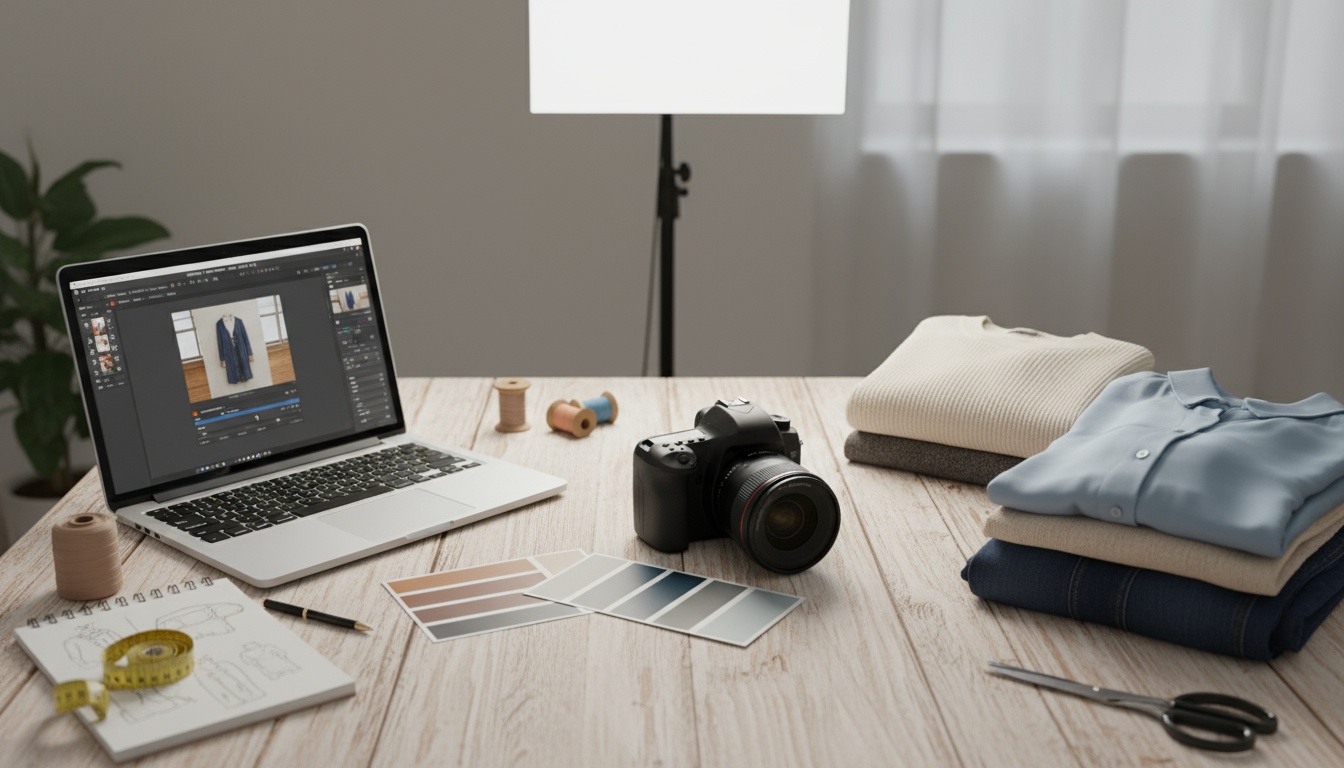
Four Approaches Compared: Finding Your Best Photography Solution
1. DIY In-House Photography
Pros: Lowest upfront cost (camera, lighting, time only), complete creative control, instant asset ownership, unlimited shooting flexibility.
Cons: Requires equipment investment ($2,000-10,000 for professional setup), steep learning curve limiting initial quality, significant time demands for shooting and editing, inconsistent results without experience.
Best for: Indie brands, social media managers, and content creators comfortable with technical learning and willing to trade time for cost savings.
2. Freelance Photographers
Pros: Professional quality at lower rates than agencies, flexible project-based arrangements, direct negotiation on pricing and deliverables, scalable as needed.
Cons: Wide variance in skill levels and pricing, coordination and scheduling challenges, additional fees for revisions, licensing, and rush delivery, quality inconsistency between photographers.
Best for: Growing Shopify/WooCommerce brands and DTC labels with moderate budgets seeking professional quality without agency overhead.
3. Photography Agencies & Studios
Pros: Full-service solution (creative direction, models, styling, retouching), managed workflow eliminating coordination headaches, consistent professional quality, scalable resources for large campaigns.
Cons: Premium pricing ($3,000-25,000+ per shoot), slower turnaround for approvals and revisions, less agility for rapid product launches, long-term contracts often required.
Best for: Mid-size to enterprise brands prioritizing full creative direction, brand consistency, and willing to invest significantly in visual content.
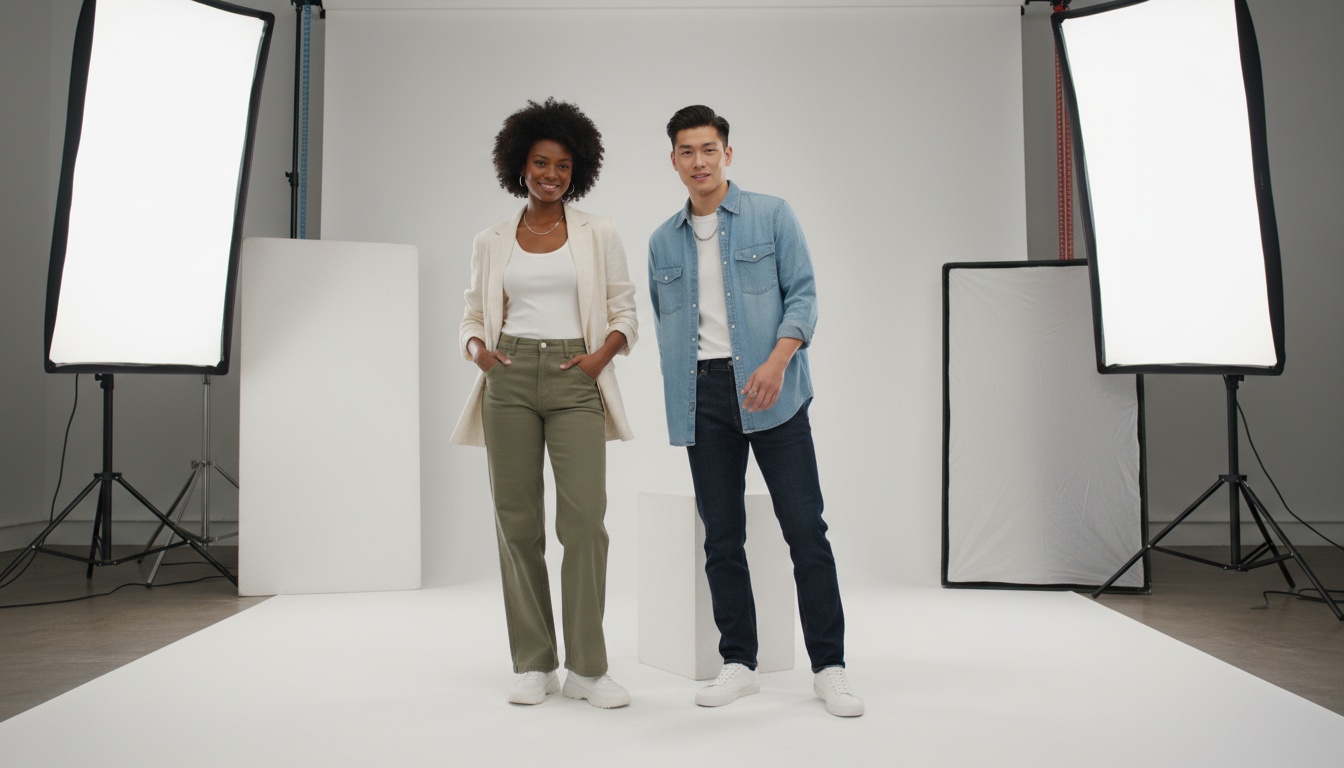
4. AI-Powered Photography Platforms
Pros: Lowest per-image cost at scale ($0.20-0.40 vs $40-200 traditional), instant asset generation (minutes vs weeks), no physical shoots/models/studios required, unlimited variations for testing, bulk upload capabilities for entire catalogs.
Cons: Platform quality varies—verification essential, complex creative concepts may need refinement, initial learning curve for optimal prompts.
Best for: Fashion e-commerce brands, content teams, and entrepreneurs prioritizing speed, cost efficiency, and scalability without compromising professional quality.
Actionable Strategies for Reducing Photography Costs
Clarify requirements upfront: Detailed briefs (catalog shots, lifestyle scenes, campaign assets) prevent costly revisions and scope creep.
Negotiate bulk packages: Volume discounts drop per-image rates 30-50% and streamline post-production workflows.
Optimize licensing agreements: Confirm usage rights (e-commerce, social, print, advertising) before shooting—extended licensing adds 25-100% to costs.
Automate post-production: Background removal, retouching, color correction, and marketplace formatting tools save $50-150 per image.
Leverage AI content creation: Modern platforms generate campaign-ready visuals from simple product photos, cutting per-image costs by 95% while maintaining professional quality.
Why AI-Powered Photography Transforms Fashion E-Commerce
Milano AI represents the evolution beyond traditional photography constraints. Instead of managing photographers, models, studios, and agencies, fashion brands now access:
- Instant campaign creation: Transform product photos into lifestyle imagery, marketing videos, and social content in minutes
- Unlimited bulk production: Generate countless variations for every SKU—white backgrounds, ghost mannequin, lifestyle contexts—without additional costs
- Natural language editing: Request background changes, color variations, or creative retouching in plain English
- Complete automation: Replace models, stylists, studios, and agencies with AI workflows handling catalog building to video campaigns
This translates to 95% cost reduction, 10x faster production, and seamless scaling without quality compromise.
The Complete Fashion Business Operating System
Milano AI extends beyond photography replacement. Fashion e-commerce managers gain a complete platform managing:
- Professional visual content indistinguishable from studio photography
- Automated campaign launches (video, social media, SEO content)
- Creative scalability (entire catalogs, lookbooks, interactive assets on demand)
- Competitor intelligence and market analysis
- SEO optimization and AI search ranking
- Social media automation across all platforms
- Analytics and strategic insights—all from one dashboard
The result? Indie founders to enterprise directors eliminate creative bottlenecks, slash content budgets, and accelerate time-to-market—without hiring agencies or building internal teams.
For fashion brands serious about ROI, scalability, and competitive advantage, AI-powered photography isn't just cost-effective—it's the strategic imperative for 2026 and beyond.
Frequently Asked Questions
AI-powered photography platforms like Milano AI offer the lowest per-image cost ($0.20-0.40 vs $40-200 traditional) with professional quality. Small brands save $32,000+ annually compared to traditional shoots while generating unlimited variations for testing. The Studio plan ($199/month, 500 credits) provides more content than $15,000+ in traditional photography monthly.
Scale Your Fashion E-Commerce with AI
Create professional campaigns and product photography in minutes. Start with 10 free credits—no credit card required.
Related Articles

Marketplace Video Optimization: How Fashion Brands Scale Conversions 30%+ in 2026
Fashion brands see 30%+ conversion lifts with optimized marketplace videos, but manual production fails at scale. Learn the cause-and-effect strategies driving success on Amazon, Etsy, and Shopify in 2026—from AI compression eliminating load penalties to shoppable overlays converting views into sales. Complete guide with actionable tactics for DTC brands and retailers.

AI Fashion Photography vs Traditional Shoots: The 2026 Cost-Benefit Analysis
AI fashion photography vs traditional shoots: Compare costs, quality, and speed in 2026. Fashion brands cut content costs by 95% while scaling production 10x. Learn the two proven methods (background-to-lifestyle and flatlay-to-model) with real ROI calculations showing $4K-12K traditional shoots vs $25-500/month AI solutions.

10 Game-Changing Ways to Create AI Fashion Videos That Boost Sales in 2026
Discover 10 actionable ways to create AI fashion videos that boost e-commerce sales in 2026. Transform product photos into runway reels, 360° spins, try-on videos, and UGC-style content in minutes. Cut costs by 95%, scale production 10x, and dominate TikTok, Instagram, and Shopify with professional video content—no models or studios required.